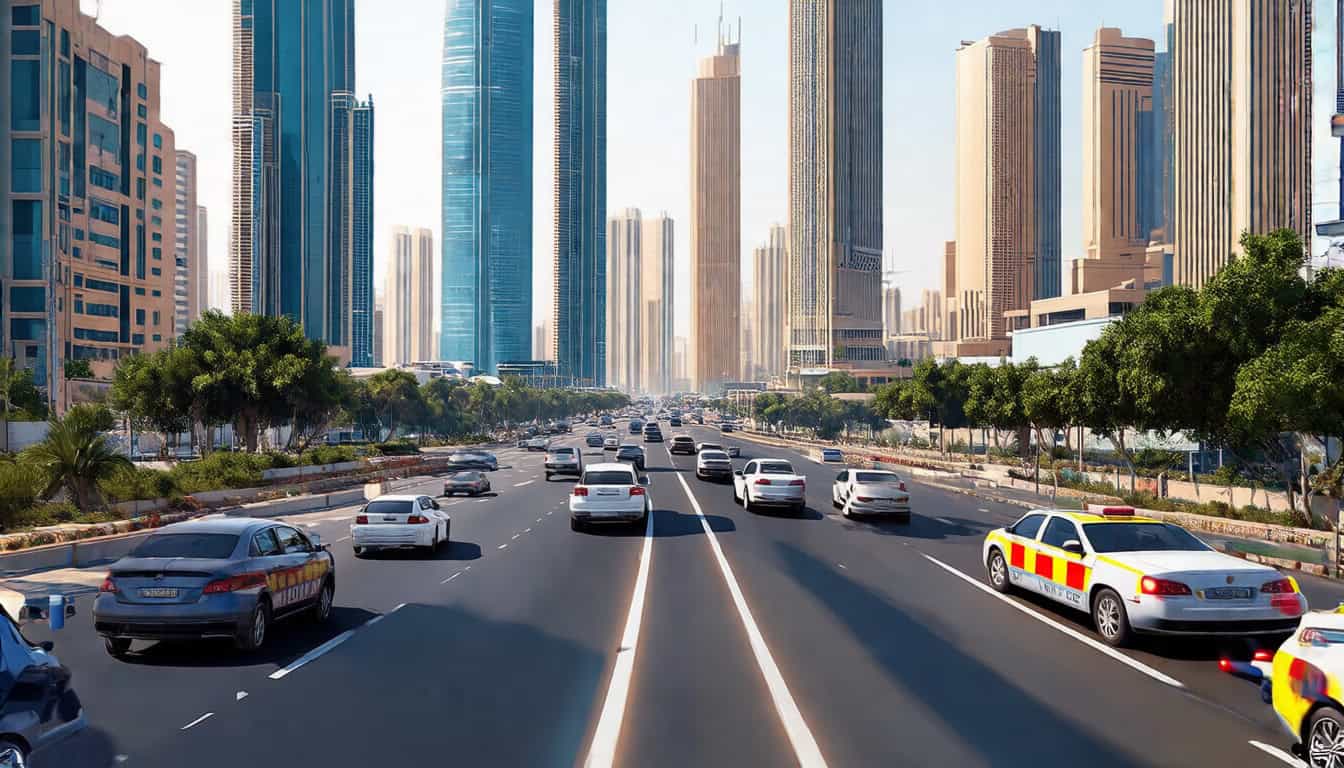
Qatar often presents itself as a land of contrasts, where safety exists on two very different fronts. In Doha, the capital, one finds a city almost untouched by common crime. Yet, beneath this peaceful surface lies one of the most dangerous environments for drivers in the world. This article explores the contradictions that make Qatar a unique place to live or visit, especially through the lens of safety.
The first question many people ask about Qatar is whether it is safe. The answer depends on what kind of safety one means. In terms of crime typically found in large cities, such as theft or violence between gangs, Qatar boasts exceptionally low rates. This stands in sharp contrast to many Western countries, including the United States, where such crimes are far more common.
For example, crime statistics paint a clear picture. The homicide rate in Qatar is about 0.4 per 100,000 people annually, while in the United States it stands at around 6.5. Burglary happens less often, with Qatar reporting about 50.6 cases per 100,000 people compared to 74.4 in the US. The rates for robbery and auto theft follow a similar pattern, with numbers tens or even hundreds of times lower in Qatar. So in terms of common criminal threats, Qatar is extremely safe.
Walking alone at night through central parts of many international cities can feel risky, but Doha is different. It has no unofficial curfew. Many parts of the city, like the traditional Souq Waqif market, truly come alive in the evening when temperatures cool down. Shops and restaurants open late, and locals and visitors enjoy the nightlife. The city shows a dynamic character rarely seen in desert climates where daylight heat tends to drive people indoors.
For women, safety does carry another dimension. Men typically experience even lower risk, but foreigners often ask what it is like for women, especially Western women. It seems that harassment is rare compared to large Western cities facing similar issues. While some cultural practices, like "its talking," can bother visitors, violent assaults on women in public spaces remain very unusual. Overall, Doha may feel safer for women than many urban centers in Europe or North America.
The experience of foreigners also varies along national lines. Some Americans worry about mistreatment connected to political tensions. Still, Qatar was among the first nations to normalize relations with the Taliban, hosting an embassy. Yet, Americans often receive considerate treatment. Observers note that many times American nationals receive assistance or special attention, suggesting other foreigners might sometimes face less favorable experiences.
Given this strong showing on personal security, many expect road safety to match. Sadly, the opposite holds. Road accidents represent a very real and ongoing danger across Qatar. Around 5% of all deaths in the country relate to traffic incidents. That rate surpasses that of even countries known for risky driving. For comparison, fatalities related to road accidents account for only 0.42% of deaths in the UK and about 1.66% in the United States.
This elevated risk on the roads involves many factors, including high speeds, some disregard for traffic rules, and the rapid expansion of infrastructure that brings many inexperienced drivers on highways. Roads that look modern and well-maintained can be deadly if one is not cautious. Families have perished in crashes that underline the gap between perception of safety in cities and the reality of driving conditions.
For visitors or newcomers planning to drive in Qatar, precautions are necessary. Whenever possible, use the newly built underground or metro systems, which cover much of the greater Doha area. When driving is required, renting a larger vehicle equipped with multiple airbags offers more protection. Staying aware of local driving habits and avoiding nighttime driving can also reduce risk.
Beyond safety, Qatar’s cultural codes influence life sharply. Public displays of affection, common in Western societies, are frowned upon, especially during the holy month of Ramadan. Local laws rely on Islamic Sharia, where certain punishments, though rarely enforced, exist. Modest dress is expected in public places, particularly during religious holidays. Pork products are scarce, sold only in one authorized store across the country.
Internet use and social media are monitored by authorities, reinforcing a conservative public atmosphere. Despite this, Qatar remains an attractive destination for those seeking a fresh start. It ranks among the best nations to begin a new life with limited funds, especially for people who hold skills in demand. This is a surprising fact given some misconceptions in media portrayals of the country.
In summary, Qatar’s contradictions make it fascinating and complex. On one hand, one experiences a crime-free city with thriving evening life and a sense of personal security uncommon elsewhere. On the other hand, this apparent safety hides a daily danger on roads that can claim lives and cause severe injuries.
Navigating these contradictions requires awareness and respect for local norms. With the right approach, living or traveling in Qatar can be rewarding and culturally enriching. Yet, it would be wise never to underestimate the risks associated with driving there. Balancing the safe urban environment with the perils on the asphalt remains a key challenge for anyone connected to Qatar.
Qatar exemplifies how richness in culture and order can coexist with challenges in infrastructure use, revealing a layered society where safety depends largely on one’s choices and behavior.