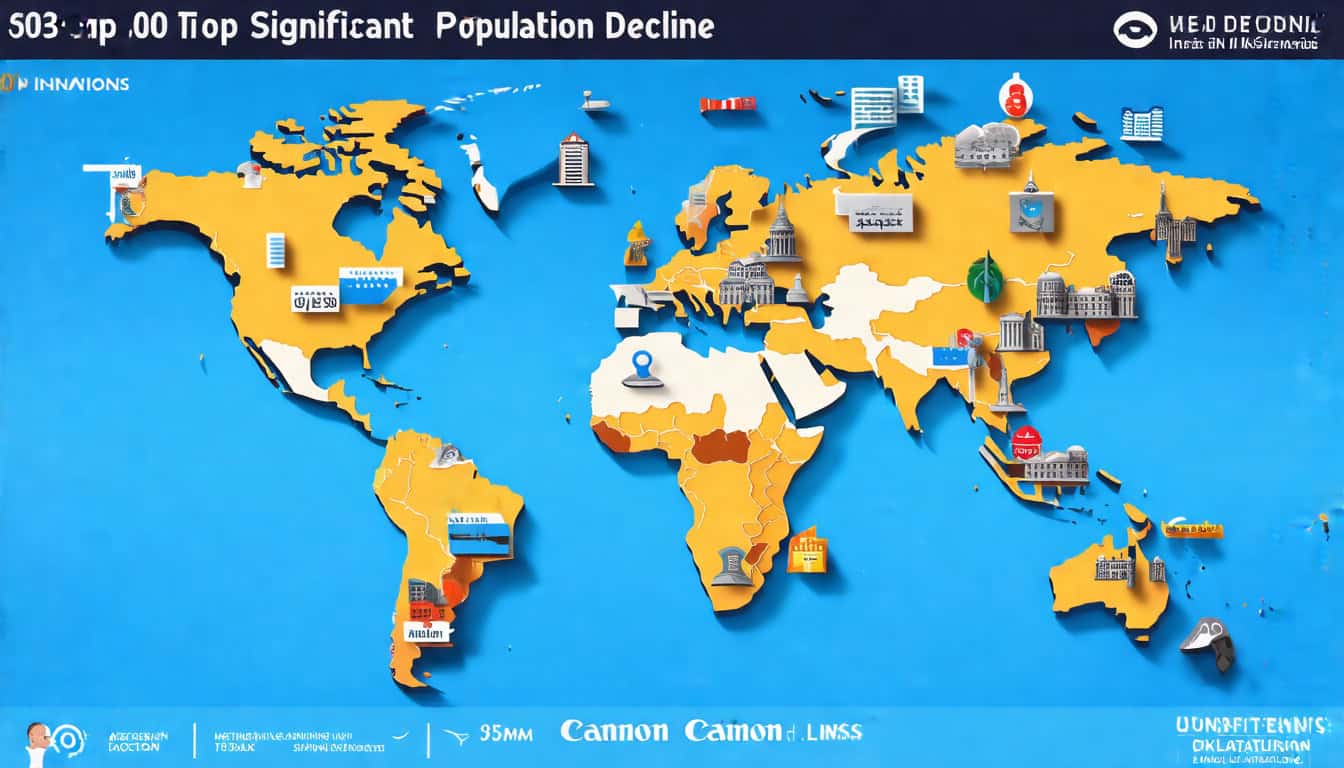
Many countries worldwide face a sharp decline in their populations. This decline brings challenges that touch several parts of their societies, economies, and governments. Understanding these challenges becomes essential for anyone living in or moving to these countries. With fewer young people working and paying taxes, governments struggle to maintain public services. Economic pressures rise, and the future looks uncertain. Here, we explore ten nations where populations are falling fastest and the effects this brings.
China
China leads with a current population of about 1.4 billion people. However, its birth rate sits at 1.16 births per woman, well below the replacement rate of about 2.1 needed to keep population numbers stable. The population is expected to decline by around 7.9% by 2050. While this may seem small in percentage terms, it equals roughly the population of Germany disappearing within three decades.
One reason for this decline is the one-child policy, which lasted from 1979 to 2015. It restricted most families to one child each. Parents preferred sons and often ended pregnancies when expecting girls, leading to a gap with 20% more teenage boys than girls today. By 2050, nearly 30% of China’s population will be older than 60 years. This aging population stresses healthcare and pension systems already stretched thin.
Russia
Russia faces a population decline forecasted at 8% by 2050. The country struggles with low birth rates (1.49 births per woman) combined with high mortality rates and significant emigration. Many educated Russians leave seeking better job opportunities abroad, creating a "brain drain." Since the war in Ukraine began, movements of people intensified, with many Russians emigrating to Turkey, Kazakhstan, and Dubai.
Alcohol use, tobacco consumption, and high suicide rates among young people further reduce the workforce. There is also a notable gap in life expectancy between men and women caused by violence and health issues.
Poland
Poland’s fertility rate has dropped, reaching an expected 1.1 by 2024. This rate is roughly half the 2.1 replacement level needed to keep the population stable. Despite this, the population decline has yet to be severe because many people who left Poland are now returning thanks to better economic conditions. Still, the trend suggests ongoing population challenges.
Cuba
Cuba experiences a population decline driven mostly by emigration rather than birth rates. While its fertility rate is 1.6—below replacement but not the lowest—it loses many young people leaving the island for better opportunities elsewhere. This migration causes a shrinking workforce and an older population. The population is expected to drop from 11.2 million to about 10 million by 2015, about an 11% decrease.
Romania
Romania’s population fell from 22.8 million in 1990 to 19.7 million today and is projected to decline further to 17.4 million by 2050. This represents an 11.2% fall. The main causes are high emigration rates and aging. Since joining the European Union, millions have left Romania for more developed countries, leaving fewer younger people behind. Romania’s population pyramid shows more people over 75 years old than babies, highlighting rapid aging.
Italy
Italy puzzles many because of its pleasant climate, delicious and healthy food, and affordable housing in smaller cities. Still, the fertility rate sits at a mere 1.21. The population of 59 million is expected to fall to 52 million by 2050, an 11.5% drop. Italy has one of the world’s oldest populations, with a median age of 47.3 years. This shift puts pressure on the economy and social welfare systems as fewer young workers support more elderly citizens.
South Korea
South Korea boasts significant economic growth from poverty after World War II to one of the richest nations today. Yet it holds the lowest fertility rate on Earth at 0.81 children per woman, expected to drop to 0.72 by 2024. Its population of 51 million might fall to 45 million by 2050, a decline of about 11.7%. The country faces a demographic crisis where an aging population and fewer births create serious challenges for future labor markets and social systems.
Greece
Greece suffers from population decline caused by low birth rates, immigration, and aging. Its drop is expected at nearly 12% in the coming decades. Birth rates have been falling since the 1980s. Greece’s population pyramid points to a dramatic reduction in residents under 35 years old. This demographic shift could destabilize the economy and place stress on healthcare and pensions.
Japan
Japan remains a fascinating example due to its long history of low birth rates. Its fertility rate is 1.33, better than some other countries on this list but still below replacement. Japan became one of the first countries to experience this trend and now holds the world’s oldest population. Its median age is among the highest globally. This aging reduces the workforce and raises the demands on social support systems.
Implications and Challenges
All these countries face several shared challenges from population decline and demographic shifts. Governments must deal with shrinking workforces, growing elderly populations, and strained healthcare and social welfare budgets. Fewer taxpayers supporting more retirees forces difficult fiscal decisions. Infrastructure, education, and other public services may decline as resources dwindle.
Many countries also see cultural changes affecting family size, such as urbanization, later marriage, and changing social roles. Economic uncertainty discourages having more children. Family planning and birth control have become common choices. Migration flows add complexity as some countries lose young workers while others gain migrants who may or may not fill gaps in the labor market.
What these trends mean for the future remains uncertain. Some countries seek policy changes to boost fertility or attract immigrants. Others face hard choices balancing budgets and funding for social programs.
Final Thoughts
The global population landscape shifts in ways that impact millions. The ten countries highlighted show how sharp population decline leads to challenges beyond mere numbers. Economies, societies, and governments all feel the pressure of fewer young people and more elderly citizens. Navigating this shift requires thoughtful planning, policies, and adapting to a new demographic reality.
If you live in or plan to move to one of these countries, consider how shrinking populations might affect your prospects, job market, and available services. Demographic trends influence many aspects of daily life and investing time to understand them helps prepare for the future.