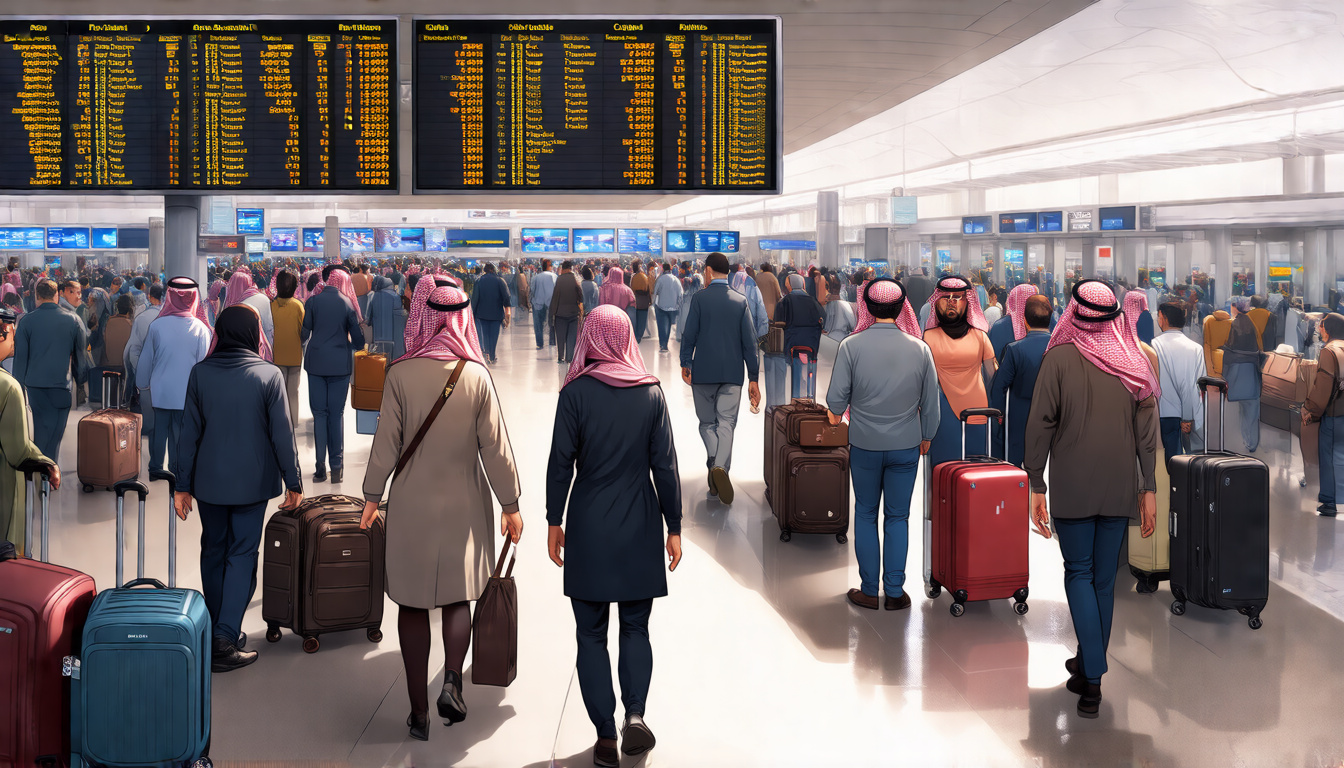
Travel Disruptions Widespread Across Saudi Arabia as Major Airlines and Airports Experience Delays and Cancellations
Saudi Arabia’s air travel system has faced notable disruptions recently, affecting key airports and several major airlines. Saudia, flynas, Emirates, and Qatar Airways encountered operational challenges leading to widespread delays and cancellations across flights serving Jeddah, Riyadh, Dubai, and other destinations.
Flight Delays and Cancellations at Key Airports
Two of the Kingdom’s busiest airports, King Abdulaziz International Airport in Jeddah and King Khalid International Airport in Riyadh, experienced a combined total of 89 flight delays and 7 cancellations over the past two weeks. At King Abdulaziz International Airport, 39 flights were delayed while 4 were cancelled. Meanwhile, King Khalid International Airport saw 50 delays and 3 cancellations.
These disruptions affected both domestic routes connecting major Saudi cities and international services spanning Asia, Europe, Africa, and beyond. Passengers experienced extended waiting periods, revised departure times, and in some cases, missed connections.
Impact on Passengers and Travel Chains
Passengers flying through Jeddah and Riyadh faced varying degrees of travel disruption. Domestic travellers encountered delays that affected short-haul connections within the Kingdom, while international travellers faced uncertainties for onward journeys. The delays posed particular challenges for business travellers in Riyadh, given its role as Saudi Arabia’s financial and administrative centre.
Connecting passengers experienced knock-on effects, with delayed inbound flights leading to missed transfers, rebooking requirements, and longer airport stays. Ground operations such as baggage handling and gate management also came under pressure as flights were rescheduled to manage the congestion.
Operational Pressures on Airlines and Airports
Although specific airline data is unavailable, the scale of disruption suggests that flight rotations, aircraft availability, and crew schedules were heavily impacted. Delayed arrivals at hub airports often trigger cascading delays across subsequent departures. Airlines likely implemented schedule adjustments and temporary cancellations to stabilise operations.
Air traffic controllers coordinated slot allocations and flight sequencing to manage the increased traffic and maintain safety. The high volume of simultaneous disruptions amplified the strain on the national aviation network.
Significance for Tourism and Business Travel
King Abdulaziz International Airport in Jeddah serves as a crucial gateway for pilgrims embarking on Umrah and Hajj journeys. Even minor delays here can affect pilgrim travel plans, ground transportation, and accommodation arrangements. Similarly, disruptions at Riyadh’s King Khalid International Airport impacted business travel, government movements, and international commercial engagements.
The aviation sector plays a central role in supporting Saudi Arabia’s growing tourism and business sectors under its national development strategies. Maintaining reliable flight operations at these key airports remains vital for sustaining traveller confidence and supporting economic growth.
Managing the Aviation Network Under Pressure
Simultaneous delays at Saudi Arabia’s main airports place increased demands on the air traffic network. Airports, airlines, and flight control authorities must balance safety precautions with efficient traffic management under peak periods. While causes were not detailed, such disruptions commonly arise from factors such as increased passenger demand, operational bottlenecks, or weather-related challenges.
Passenger Guidance and Next Steps
Travelers advised monitoring airline updates closely for changes to departure times, gate assignments, and connection statuses. Arriving early at airports remains important to accommodate longer processing times. Airlines generally offer rebooking options during periods of disruption to ease passenger inconvenience.
Airport assistance teams continue to provide real-time information and support to manage passenger flows and address concerns at terminals.
Outlook for Recovery
The recent combination of 92 delays and 7 cancellations signals a temporary but significant operational challenge for Saudi Arabia’s aviation hubs. While both Jeddah and Riyadh airports remain fully functional, the events highlight the sensitivity of complex airport systems to scheduling stresses.
Airport authorities and airlines are working to restore orderly flight schedules and improve operational efficiency. Passengers are encouraged to remain flexible and keep up to date on travel information as the network stabilises.
The ongoing efforts aim to minimise further disruption and support the smooth flow of both domestic and international air travel throughout the Kingdom.
#internationaltravelnews #latesttravelrestrictions #globaltravelupdates #travelnews2025 #internationaltraveltips #travelnews #internationaltravelnews #borderreopeningupdates #traveladvisoryupdates #flightcancellationsnews #covidtravelregulations #visapolicychanges
#internationalairportupdates #passportrenewaldelays #countryentryrequirements #travelsafetynews #internationaltraveltrends #travelalertscountry #globaltourismnews #newtravelbans #reopeningfortourists #bestcountriestovisitnow #travelinsurancenews #travelguidelinechanges #airlinestrikeupdates #globaltraveldisruptions #breakingtravelnews #notesttraveldestinations #internationaltravelforecasts #newairlineroutes #globaltravelrules #safestplacestotravel #travelindustrynews #travelbanupdates #schengenvisaupdates #travelbubbleannouncements #tourismboardupdates #realtimetraveladvisories #borderchanges2025 #embassytravelalerts #latesttravelnews #livingmediterranean #retirementtravelguide